
Tankless water heaters: benefits, limits and sizing
Continuous hot water is possible only while demand stays within the unit’s capacity—and the installation has to support it.
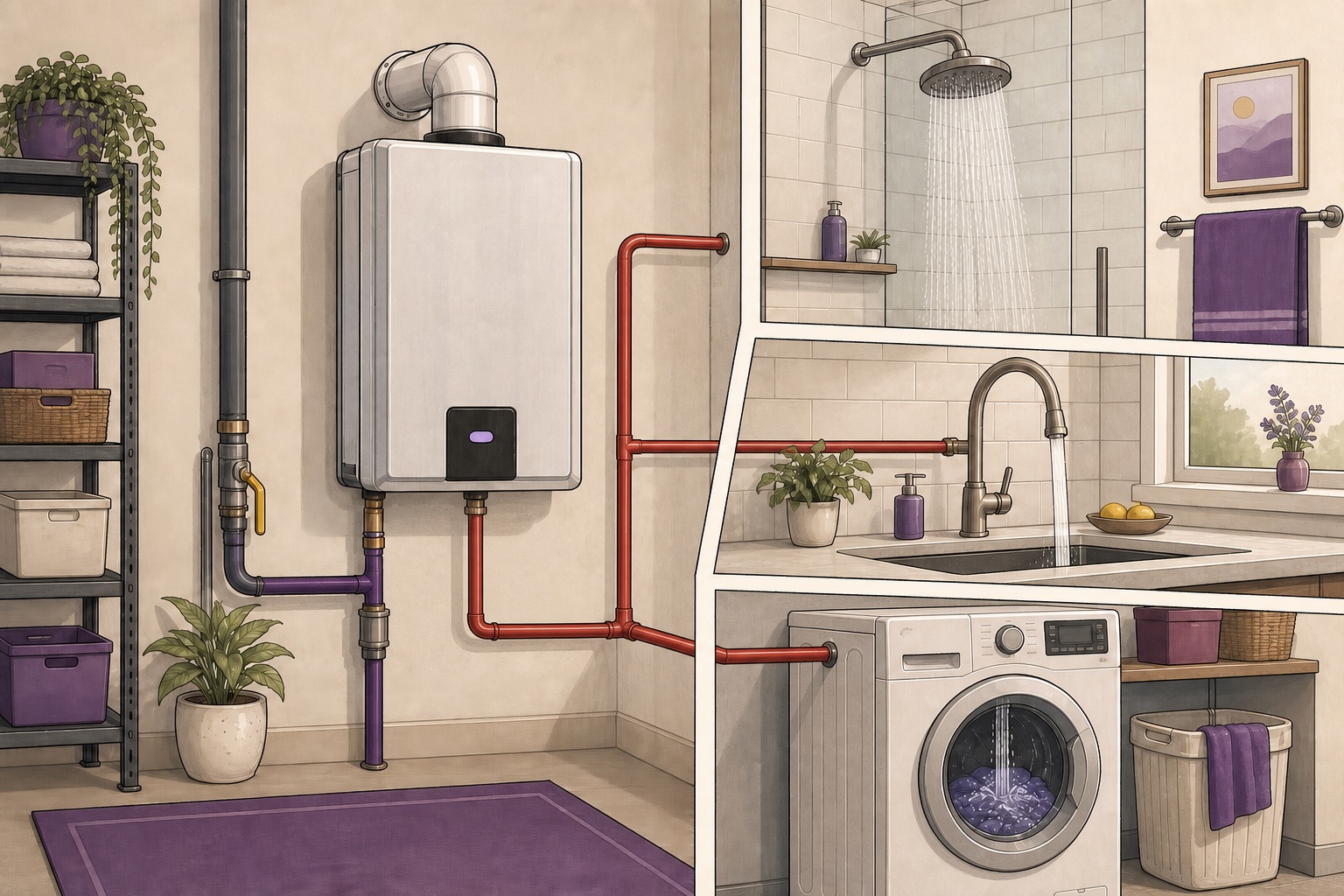
Tankless can save floor space and provide continuous hot water, but it is not unlimited. The unit must be sized for simultaneous fixture demand, incoming-water temperature and the temperature rise the household expects.
What continuous really means
A tankless heater warms water as it flows. It can keep producing hot water without waiting for a storage tank to recover, provided the requested flow stays within the unit’s output at the required temperature rise.
Several showers, faucets or appliances operating together can exceed that output. Colder incoming water also requires more heating to reach the same delivery temperature.
Installation conditions matter
A conversion may involve gas supply, venting, condensate drainage, electrical service, water piping and a suitable mounting location. The compact box does not mean every conversion is simple or appropriate.
Maintenance is still required
Water quality and scale affect heat exchangers. Follow the manufacturer’s maintenance instructions, including any required flushing or inspection schedule. Homes with hard water may need more attention.
Size it around how your home uses hot water
Sizing should reflect which fixtures may run together, not only the number of people in the home. An assessment can also compare tankless with a correctly sized storage water heater before you commit.