
Snowmelt, sump pumps and basement-water preparation
Before a fast thaw or heavy spring rain, check the drainage path and make sure the sump system can operate.
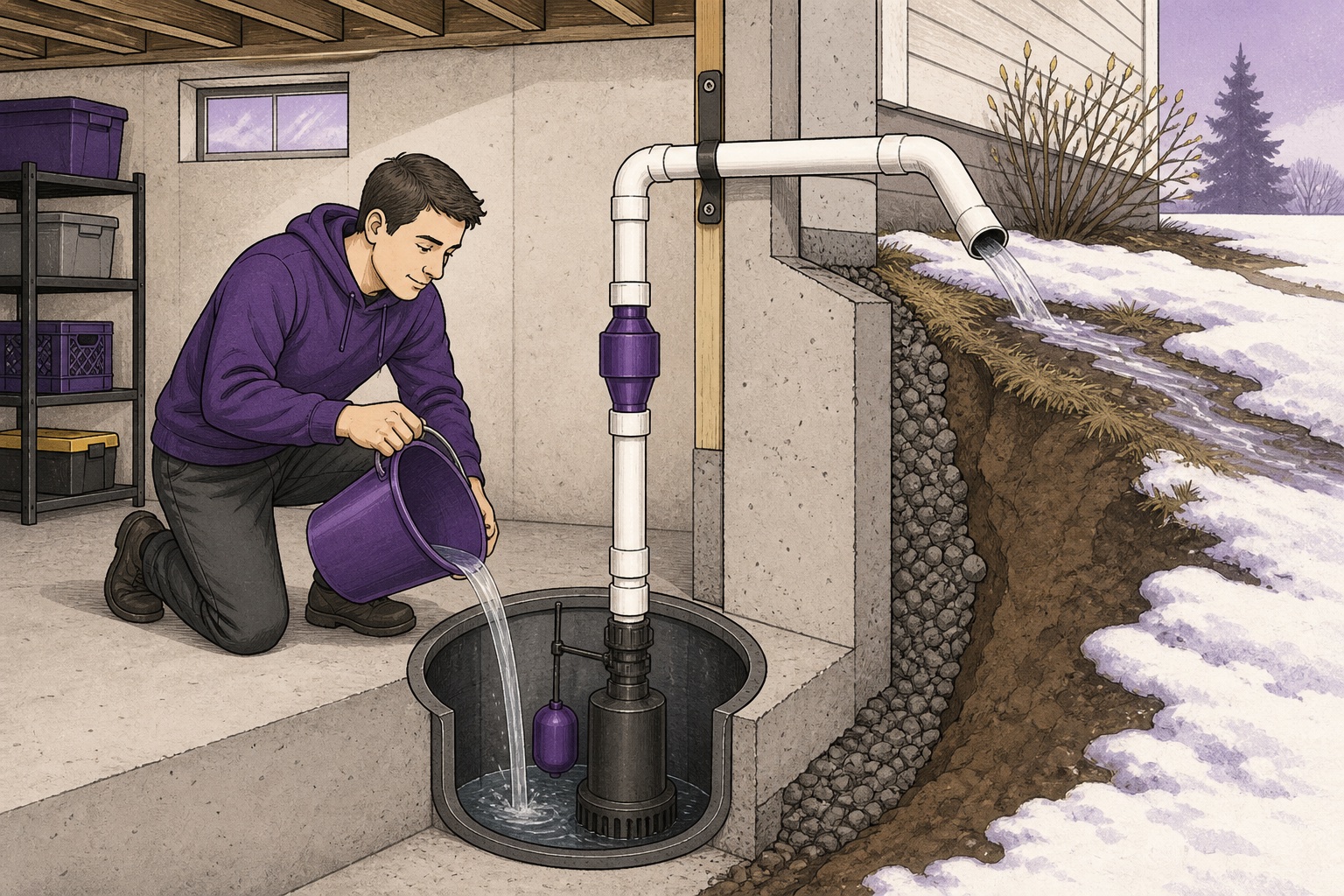
Before snowmelt accelerates, look at grading and downspouts, clear safe drainage paths, inspect the sump pit and test the pump only according to its manufacturer’s instructions. Deal with a failed pump before water is rising.
Start outside
Where safe and accessible, move snow away from foundation openings and make sure downspouts discharge where water can move away from the building. Keep nearby drains and discharge outlets clear without directing water onto a neighbour’s property or a walking hazard.
Look at the sump system
Make sure the pump is upright, plugged into its intended receptacle and not buried by stored items. Check that the discharge line is connected and its outdoor end is not frozen or blocked. Follow the pump manufacturer’s directions for any test involving water or the float.
Plan for an outage
A primary electric sump pump cannot operate through an outage unless an appropriate backup system is installed. Backup pumps and alarms need their own testing and maintenance. An extension cord is not a permanent sump-pump power solution.
If water is already entering
Keep people away from standing water that may contact electrical equipment. Do not enter a flooded area if there is a shock, gas or structural hazard. Call emergency services for immediate danger; otherwise contact the appropriate drainage, restoration, electrical or plumbing professional.