
Ontario carbon monoxide alarm requirements for homes
Since January 1, 2026, applicable Ontario homes require CO alarms beside sleeping areas and on every storey.
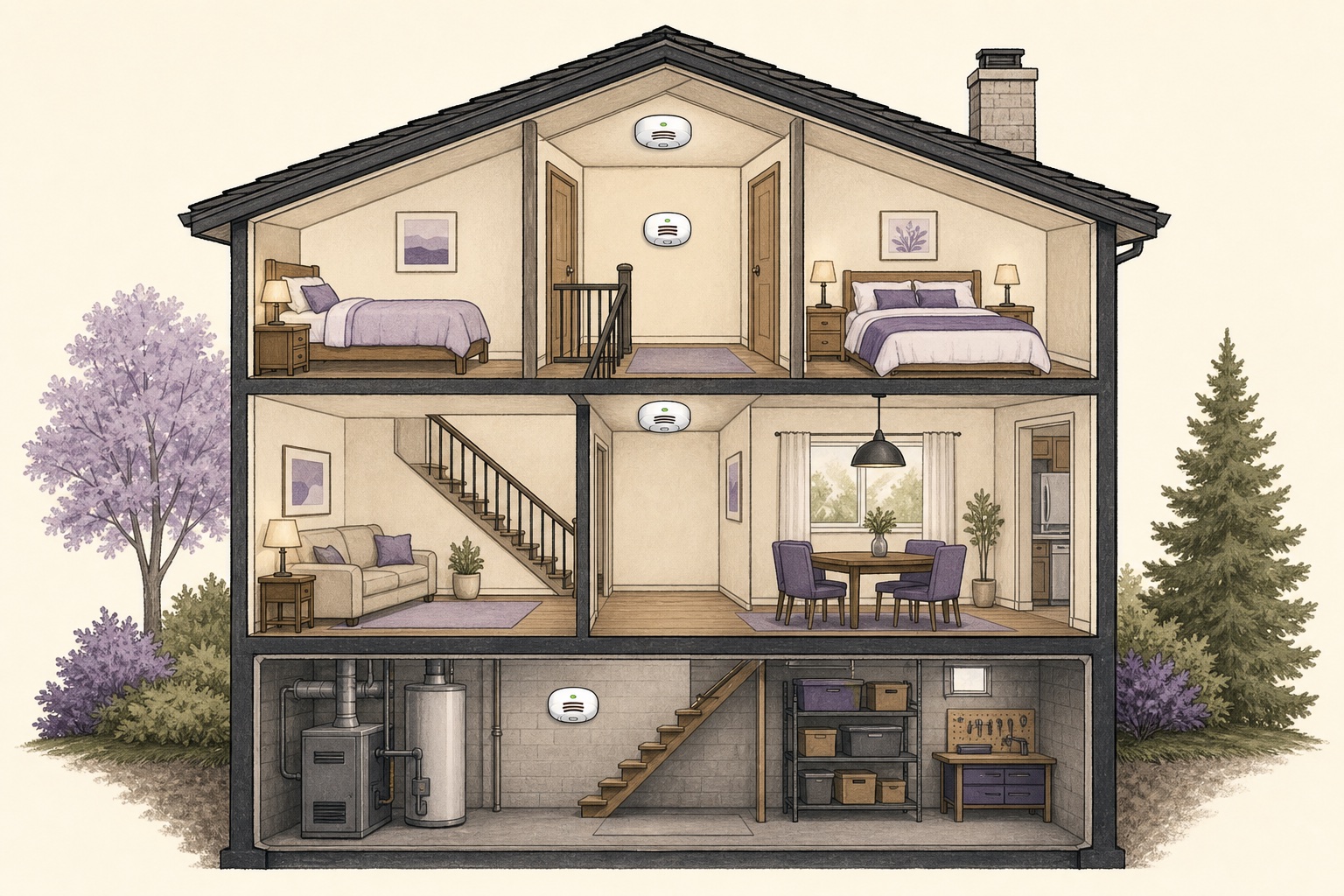
For a house with a fuel-burning appliance, fireplace, attached garage, or qualifying outside fuel-fired air supply, Ontario requires CO alarms adjacent to sleeping areas and on every storey. Expanded every-storey requirements took effect January 1, 2026.
If a CO alarm sounds, you smell gas, see smoke or believe there is an immediate danger, get everyone outside and call 911 from outside.
Which houses are covered
Ontario says a house requires a CO alarm if it has a fuel-burning appliance, a fireplace, an attached garage, or—effective January 1, 2026—is heated by air from a fuel-burning appliance outside the home.
Apartment, condo and multi-unit requirements depend on the equipment, service rooms, garages and heating arrangement. The provincial guidance sets those situations out separately.
Where alarms go
In a house, an alarm is required adjacent to each sleeping area and on every storey, including storeys without bedrooms. Install and locate alarms according to the manufacturer’s instructions.
Use an alarm certified to Canadian performance standards. Combination smoke/CO units are permitted when appropriately certified.
Owner, landlord and tenant responsibilities
Building owners are responsible for Fire Code compliance. Ontario assigns landlords installation, maintenance, testing and instruction duties in rental suites. Tenants must notify the landlord about known alarm problems and must not disable or tamper with alarms.
Confirm a specific building
Requirements can vary for apartments, condos, care occupancies and unusual heating arrangements. For an answer about a specific property, Ontario directs people to their local fire department.